Club Deals and the Future of Family Office Investing
How collaboration, expertise, and trust are reshaping private market investing.
August 31, 2026 —
Family offices are becoming increasingly active in private markets. As more wealth is created and retained outside the public markets, families are looking beyond traditional fund structures and exploring ways to access opportunities more directly.
One of the clearest examples is the rise of club deals—transactions in which multiple family offices pool capital around a specific investment while bringing complementary expertise, relationships, and resources to the table.
For families, the appeal is about more than gaining access to larger opportunities. Club deals can provide a way to share risk, expand investment capabilities, and create value through collective expertise. But they also introduce new considerations around alignment, governance, trust, and decision-making.
From Pooling Capital to Pooling Expertise
The appeal of club deals begins with a fundamental challenge in private markets: access. Unlike public markets, private investment opportunities are often relationship-driven, and the strongest opportunities may never reach a broad market.
That makes networks and specialized knowledge particularly valuable. A family may have deep expertise in an industry, another may have unique geographic relationships, and a third may have experience scaling businesses. When these capabilities are combined, the group can potentially create an investment advantage that extends beyond the capital being deployed.
This shift—from pooling capital to pooling expertise—helps explain why club investing is becoming a more meaningful part of the family office investment landscape.
A More Direct Path Into Private Markets
The growing interest in club deals also reflects a broader evolution in how families approach direct investing.
Direct investments can offer greater control and flexibility, but they require significant resources. Successful direct investing depends on more than having capital; it requires the right combination of capital, time, duration, leadership, and domain expertise.
For a family office seeking to acquire controlling interests and manage portfolio companies independently, the undertaking can resemble building a private equity firm from the ground up.
Club deals can provide a different entry point. By investing alongside experienced families or professional leads, a family office can gain direct exposure while benefiting from capabilities it may not have internally. For some families, this creates an opportunity to develop experience and conviction gradually, without immediately taking on the organizational complexity of a full direct investment platform.
That lower organizational burden, however, does not mean lower diligence requirements. In fact, with multiple parties involved, understanding the opportunity—and the people behind it—becomes even more important.
Diligence Extends Beyond the Deal
As more opportunities enter the market, families need a disciplined way to determine which ones warrant deeper consideration.
A useful framework is to evaluate the sponsor, strategy, and structure.
Is the sponsor aligned with the investment objectives? Does the strategy fit the family’s capabilities and risk tolerance? Does the structure appropriately address economics, incentives, governance, and risk?
But evaluating the transaction itself is only part of the process. Families should also ask: Why is this opportunity available?
A transaction sourced through a trusted relationship with a domain expert may have a very different starting point from one being broadly marketed in a crowded market. Understanding where an opportunity originates can provide important context for the investment thesis.
And because club deals involve multiple investors, diligence should extend to the other participants as well.
How have they behaved in previous transactions? How do they respond when circumstances change? Will they provide additional capital if needed? How do they approach disagreement?
Building for Long-Term Alignment
Diligence can help determine whether the right partners are at the table, but successful club deals also depend on keeping those partners aligned over time.
The flexibility that makes family office capital attractive can also create challenges. One family may be comfortable holding an investment for ten years or longer, while another may have a shorter liquidity horizon. Priorities can also shift as generations transition, CIOs change, or family circumstances evolve.
That is why alignment should be built into the structure from the start. Before an investment closes, participants should establish clear expectations around leadership, decision-making, additional capital, valuation, liquidity, conflicts, and dispute resolution. The goal is not to anticipate every possible scenario, but to create a framework for navigating change when it occurs.
Clear roles are equally important. In many successful club deals, one family or group takes the lead because it has the strongest relationship with the opportunity or the deepest relevant expertise, while other participants contribute capital and specialized knowledge. Defining these roles early can help the group move efficiently—and stay aligned as the investment evolves.
The Next Chapter of Family Office Investing
Taken together, these trends point toward a broader evolution in private market investing.
Family offices are becoming more institutional in their investment processes while retaining advantages that traditional institutions may not have: longer duration, greater flexibility, specialized expertise, and the ability to make decisions without the same pressures facing traditional fund structures.
At the same time, families are increasingly willing to collaborate—pooling capital around individual transactions, building networks around specific industries or geographies, and leveraging technology to make those relationships more efficient.
The result may be a new model of private market investing that combines the sophistication of institutional capital with the flexibility, relationships, and long-term orientation of family offices.
For families considering this approach, the opportunity is significant. But success will depend on more than finding the right investment. It will require the right people, incentives, structure, and governance to support that investment over the long term.
At Mack International, we partner with family offices, family investment firms, and family enterprises to build the leadership and organizational capabilities needed to navigate an increasingly sophisticated investment environment.
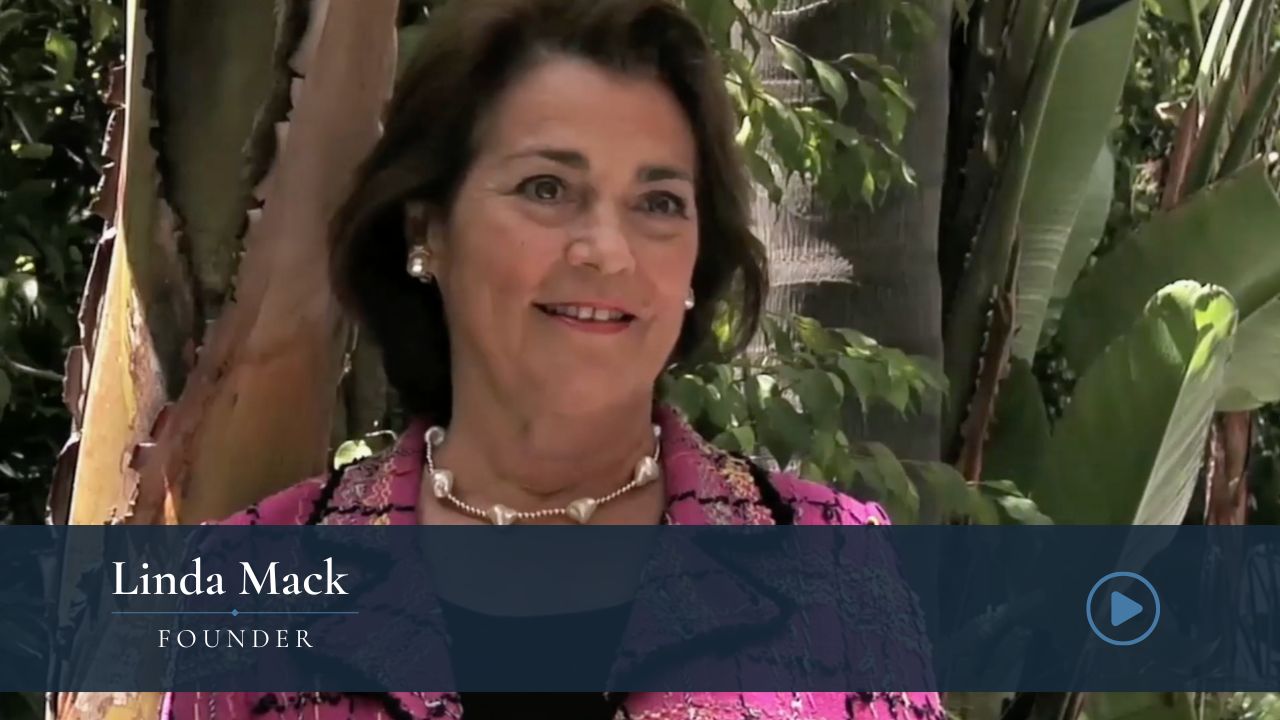
To continue exploring this topic, listen to our recent Mack Podcast conversation, Club Deals and the Future of Family Office Investing, and read our related article, The Responsibility Transfer: Preparing Future Generations for Ownership, which explores how family offices are preparing future generations to become responsible, capable stewards of family wealth.
Subscribe to Mack's Monthly Insights

Premier Retained Executive Search & Strategic Human Capital Consulting Firm
For single and multi-client family offices, family enterprises, and the full spectrum of wealth and investment management and financial services firms that serve ultra-high-net-worth individuals and family offices.

Social Media Links
Office Locations
Nashville, TN
West Palm Beach, FL
Dallas, TX
New York, NY
Chicago, IL